
B.Com Colleges in Udaipur: What Should Students Check Before Taking Admission?
Most students pick a college in a rush. The results come out, the forms open, and a cousin says, “Just go where everyone goes.” Three years later, some of those students find out the affiliation was provisional, the fees had extras, or the “practical training” meant one lab session a semester.
You can avoid that. This guide gives you a plain checklist for comparing B.Com colleges in Udaipur before you pay a single rupee. It covers affiliation, eligibility, fees, teaching, career support, and red flags. Let’s break it down.
Quick Checklist: What to Check Before B.Com Admission
Here is the short version. Details follow below.
- Confirm the university affiliation in writing.
- Check whether the affiliation is provisional or regular.
- Read the eligibility rules and the document list.
- Get the full fee breakdown, including extra charges.
- Ask for the syllabus and see how practical work is taught.
- Meet a teacher and a current student.
- Check how the college supports CA, CS, or CMA plans.
- Ask for placement and internship data by year.
- Visit the campus and test the commute.
1. Check Affiliation and Approvals
Affiliation decides who sets your syllabus, runs your exams, and issues your degree. Most colleges in the city run under Mohanlal Sukhadia University (MLSU). MLSU has around 190 affiliated colleges in the Udaipur, Chittorgarh, Rajsamand, and Sirohi districts. A college can claim affiliation on a banner, so verify it.
Ask for the Affiliation Letter.
Request a copy of the affiliation letter. Check the college name, the programme (B.Com), and the session. Then compare it with MLSU’s own records. MLSU’s website carries a list of affiliated colleges and a page of affiliation notifications.
Ask Whether Affiliation Is Provisional
Some notifications on MLSU’s page grant provisional or temporary affiliation to colleges for specific programmes. Provisional status is not a red flag by itself. A new programme often starts that way. But you should know which status your college holds, for which programme, and until when. Ask the principal to answer that in writing.
Understand What NAAC Does
NAAC grades colleges on quality. It does not decide whether a degree is valid. In a reply to the Lok Sabha, the government said NAAC accreditation was voluntary at that time and that institutions missing from NAAC’s website are unaccredited. The rules have tightened since, so check the current status on the NAAC website, not on a college brochure. Claims can be wrong. In 2025, NAAC issued a show-cause notice to a university over accreditation claims that it called false. If a college says it holds a grade, look it up yourself.
2. Read the Admission Rules and Eligibility
B.Com colleges in Udaipur follow MLSU norms for eligibility. One listing site gives the B.Com requirement as a pass in Class 12 in any discipline with at least 48% marks, selected on merit. Pacific College’s B.Com page says the same: Class 12 from a recognised board, any stream, and a minimum of 48% as per MLSU norms.
Merit, Not Entrance Tests
Aggregator sites report that MLSU’s own undergraduate admissions in 2026–27 used Class 12 merit through an online portal, with no entrance exam. Affiliated colleges may run their own steps. Ask the college how it handles applications, merit lists, and seat confirmation, and whether the dates have closed.
Keep Your Documents Ready
Pacific College’s admissions page lists these documents:
- 10th mark sheet
- 12th mark sheet
- Transfer Certificate
- Migration Certificate, if applicable
- Passport-size photographs
- Valid government ID
Most colleges ask for similar papers. Make photocopies and keep the originals safe. Never hand over originals without a signed receipt.
3. Compare Fees in Writing
Fees look simple until you add up the extras. Ask every college for a printed fee sheet that covers:
- Annual tuition
- University enrolment and exam fees
- Library, lab, or activity charges
- Certificate course or workshop fees
- Uniform, transport, and hostel costs, if you need them
- Refund and instalment rules
Do not trust online fee tables without checking. Two listing sites give very different B.Com fees for the same university: one lists roughly ₹6,000 to ₹8,000 a year. Another lists ₹15,000. That gap shows why a signed fee sheet from the college matters more than a website table.
For reference, Pacific College’s site lists a B.Com annual fee of ₹25,000 and asks applicants to contact the admissions office for complete details. Treat that number as a starting point, and confirm it before you plan your budget.
4. Look at the Syllabus and How It Is Taught
B.Com syllabi usually cover financial accounting, business law, corporate accounting, taxation, auditing, and cost accounting. The title is the same at every college. The teaching is not.
Ask these questions:
- Can I see the full syllabus for all three years?
- How many classes per week does each subject get?
- How do you teach taxation and accounting: from textbooks only, or with practice on sample data?
- Is there an accounting lab? Which software do students use?
- How often do students present, submit projects, or take mock tests?
A lab means little if students visit it twice a year. Ask to see the timetable. If you are still weighing B.Com against management, read BBA vs B.Com after 12th.
5. Check Faculty and Class Support
Meet at least one teacher from the commerce department. Ask what they teach, how long they have taught, and how they help students who fall behind. A good teacher answers plainly and does not rush you.
Also ask about class size. A smaller group lets you ask questions and get feedback. Visit a live class if the college allows it.
6. Ask About Certificate Courses and Workshops
Skills outside the syllabus can set you apart. Pacific College’s admissions page lists certificate courses in artificial intelligence, digital marketing, graphic designing, and an accounting lab. Its website also lists workshops on personality development, graphic designing, digital marketing, and AI. A photography workshop was also announced for 26 September 2026.
For any college, ask:
- Are these courses part of the fee or extra?
- How many hours do they run?
- Who teaches them?
- Do students receive a certificate?
- Can first-year students join?
Short courses help only when you attend and practise. Treat them as an add-on, not a replacement for the degree. To see which skills employers value, read why a degree isn’t enough.
7. Plan Your Next Step: CA, CS, CMA, or a Job
Many B.Com students aim for professional courses. Check how the college fits that plan.
ICAI lets students from any stream join the CA course after Class 12, and it offers a Direct Entry route for commerce graduates with at least 55% marks to skip the Foundation exam. Dates and rules change, so read ICAI’s website before you decide. For a longer walk-through, see how to plan your B.Com to CA/CS/CMA path early.
Then ask the college practical questions:
- Do class timings leave room for coaching?
- What are the attendance rules?
- Can teachers guide me on CA, CS, or CMA stages?
- Do students who study for these exams get any schedule flexibility?
Your answers decide whether you can balance a degree and exam prep.
8. Verify Placement and Internship Claims
A bold number on a banner means nothing without context. Ask for written records covering:
- How many students applied for jobs or internships
- How many received offers
- Which companies or sectors hired them
- The range of salaries, not only the highest one
- The year the data covers
Then talk to two or three alumni. Ask what the college actually did for them: interview practice, company visits, or only a notice board. Pacific College’s site mentions placement and career support, internships, and guidance. For this college and any other, ask to see the records behind such statements.
9. Visit the Campus and Test the Commute
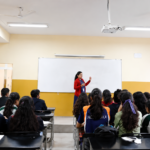
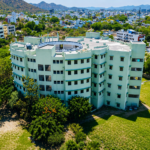
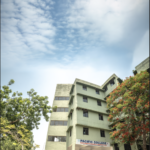
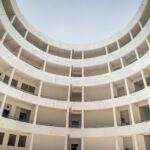
Go once, on a normal working day. Walk through classrooms, the library, and the lab. Look at cleanliness, seating, and ventilation. Talk to students who are not part of a guided tour. The college’s infrastructure page and this look at a day in the life of a Pacific College student show what to compare against.
Then test the trip at class time. A 20-minute ride on a quiet afternoon can turn into 45 minutes in morning traffic. Pacific College’s address is Chitrakut Nagar, Phase-1, Near P.F. Office, Udaipur; find it on the contact page. Whatever college you consider, check the route in advance.
Red Flags to Watch For
- The college cannot show an affiliation letter.
- The staff avoids questions about provisional status.
- Fees change between phone calls and paperwork.
- Staff pressure you to pay today because “seats are closing”.
- The college promises placements or high packages without data.
- The brochure lists approvals or grades you cannot find on official sites.
- The college’s name closely matches another institute, and staff avoid clarifying. Several Udaipur providers use “Pacific” in their names, so read the full name and address.
A Simple Comparison Sheet
Copy this table into your notes and fill it for each college you visit.
Item | College A | College B | College C |
Affiliation letter seen (yes/no) | |||
Affiliation status (regular/provisional) | |||
Annual fee in writing | |||
Extra charges | |||
Syllabus copy received. | |||
Accounting lab and software | |||
Certificate courses | |||
Attendance rule | |||
Placement data received | |||
Commute time at class hours |
When the table is full, the better choice usually stands out.
FAQs
- What is the eligibility for B.Com admission in Udaipur? Colleges affiliated to MLSU usually ask for a pass in Class 12 from a recognised board, in any stream, with at least 48% marks. Pacific College’s B.Com page lists the same rule. Confirm the current figure and dates with the college.
- How do I know if a college is really affiliated to MLSU? Ask for the affiliation letter, then compare it with the list of affiliated colleges and the affiliation notifications on MLSU’s website. Check the programme name and session, and ask whether the status is provisional.
- Is NAAC accreditation necessary for a valid B.Com degree? NAAC grading reflects quality review. It does not decide whether a degree is valid. Still, check any grade a college claims on the NAAC website, since brochures can be wrong or out of date.
- Can I do CA after B.Com? Yes. ICAI lets students from any stream join the CA course after Class 12. Commerce graduates with at least 55% marks can use its Direct Entry route to reach Intermediate. Check ICAI’s website for current rules before you register.
- What should I ask about fees? Ask for a printed fee sheet covering tuition, university fees, lab or library charges, course fees, and refund rules. Pacific College lists ₹25,000 per year for B.Com and asks applicants to confirm full details with its admissions office.
Final Thoughts
Good choices come from good questions. When you compare B.Com colleges in Udaipur, ask for papers, not promises. See the affiliation letter, read the fee sheet, meet a teacher, and test the commute.
If you want to see one college’s programme details, admission steps, and contact page, Pacific College lists them at pacificcollegeudaipur.com. Use the same checklist there as you would anywhere else. Then pick the college that earns your trust, one document at a time.